


Professional Heat Pump for Rice Eel Farming – Precise Temperature Control
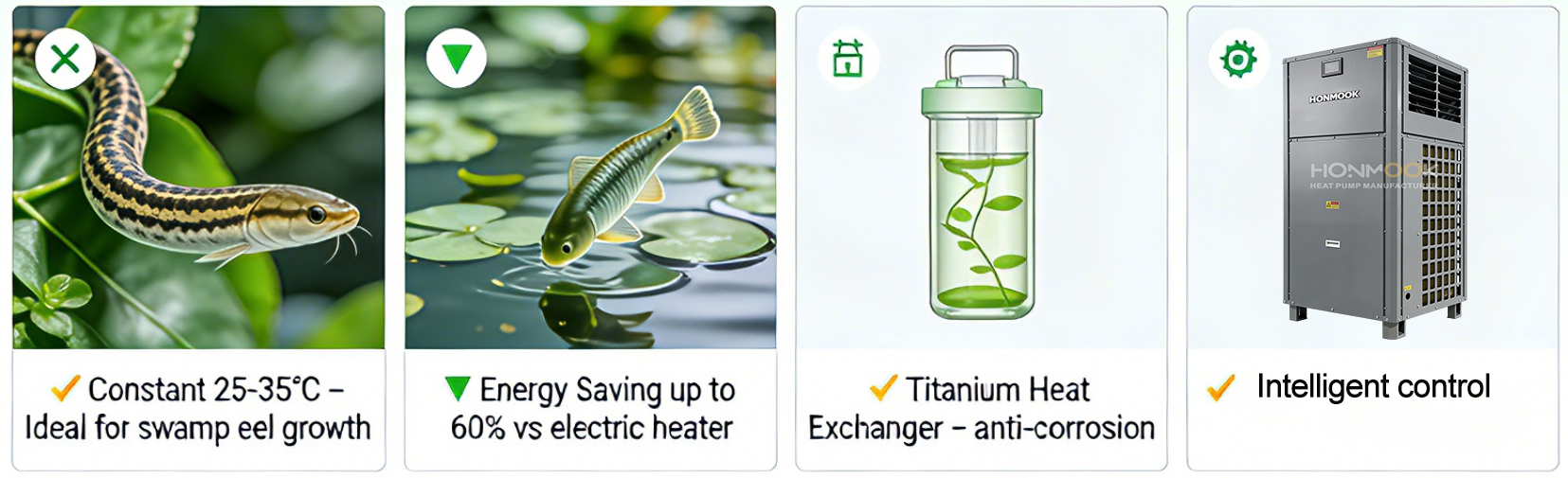
1. Stable Water Temperature = Faster Growth: Eels are poikilothermic – their metabolism follows water temperature. At 28°C, they digest food efficiently and gain weight 30–40% faster than at 22°C. A constant temperature heat pump eliminates daily swings (e.g., 20°C at night, 30°C at noon), reducing stress and disease outbreaks.
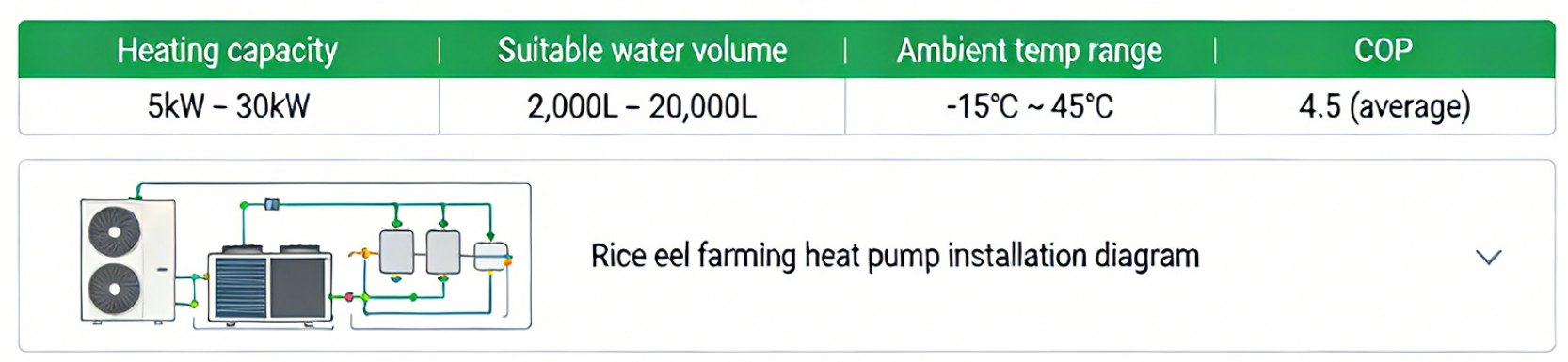
2. 60% Lower Electricity Cost: Compared to electric resistance heaters (COP=1), a heat pump with COP 4.5 cuts energy use by more than half. For a 10,000L eel pond in winter, monthly savings can exceed $150.
3. Heating + Cooling in One Unit: In tropical countries like Vietnam or Thailand, summer water temperatures can exceed 35°C, which is lethal for rice eels. Many rice eel farming heat pumps offer reverse-cycle cooling – automatically switching to cooling mode when the pond overheats.
4. Safe for Fish and Farmers: No exposed heating elements inside the water, eliminating electrocution risk.
Customized Rice Eel Farming Heat Pumps – Precision Temperature Control, Not One-Size-Fits-All
Generic heat pumps waste energy and fail in real eel ponds. Get a customized rice eel farming heat pump – matched to your water volume, climate, and insulation. Lower bills, stable temperature.
Most eel farmers discover the hard way: a standard heat pump is rarely the right answer for a real eel pond.
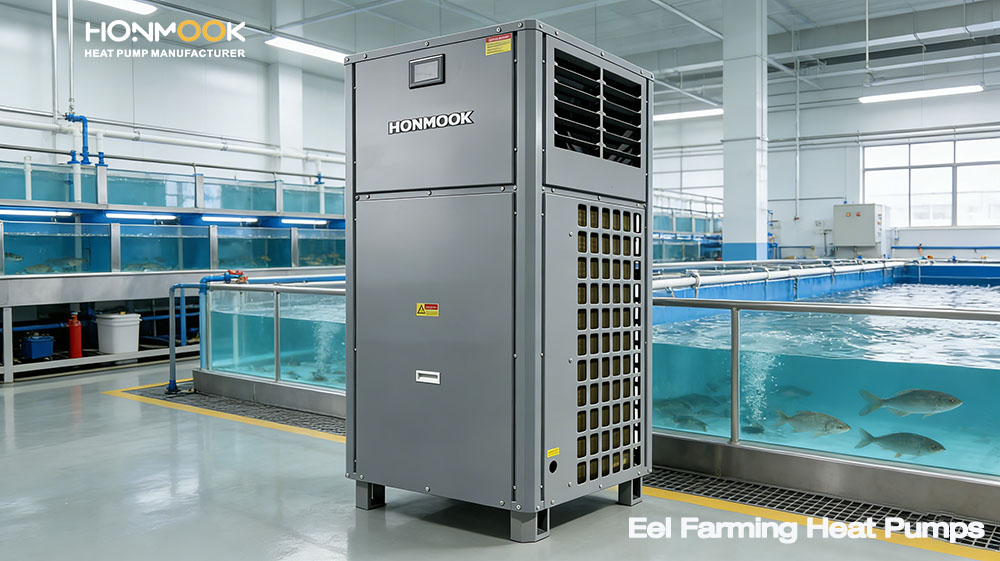
You search for a “rice eel farming heat pump”. You buy a unit that looks correct on paper. Then winter arrives. The pond temperature swings. The compressor short-cycles. Your electricity bill jumps – but the eels still slow down.
The problem is not the technology. The problem is mismatch.
A true customized heat pump for rice eel farming is not a bigger box or a higher price tag. It is a system designed around your specific pond, your local winter lows, and your eels’ actual needs. That is the only way to achieve constant 26–28°C water without paying for wasted capacity.
Why Standard “Eel Heat Pumps” Fail in Real Farms
Walk into any aquaculture equipment catalog. You see neat rows of heat pumps: 5 kW, 9 kW, 15 kW. One table. One recommendation formula. Every farmer gets the same short list.
But your pond is not a catalog page.
Surface area differs – A shallow, wide pond loses heat three times faster than a deep, narrow tank of the same volume.
Insulation varies – Concrete, liner, soil contact, floating cover, greenhouse – each changes heat loss by 40% or more.
Climate is local – A farm in northern Vietnam (winter 8°C) versus southern Thailand (winter 22°C) cannot use the same heat pump.
When a standard unit is undersized, it runs 24/7, never reaching target temperature. When oversized, it short-cycles – on for five minutes, off for ten – destroying its own compressor and operating at half its potential efficiency.
The result: higher electricity bills, shorter equipment life, and unstable eel pond temperatures.
A site-specific eel farming heat pump eliminates this gamble.
What Real Customization Looks Like for Your Eel Pond
Customization is not a marketing word. It is a technical process that changes every component choice.
1. Matched to Your Exact Heat Loss – Not Your Pond Volume Alone
Volume is only the starting point. We calculate your pond’s real heat loss using:
Surface area (where most heat escapes)
Wall and bottom material (concrete vs. insulated panels)
Soil contact (in-ground ponds lose heat to the earth)
Average winter night temperature at your exact location
Presence and type of pond cover
Example: Two 8,000L ponds. One is above-ground insulated poly tank. The other is an uninsulated in-ground concrete pond. At the same winter low of 5°C, the concrete pond needs twice the heating capacity.
A matched heating system for swamp eel aquaculture does not guess. It calculates. Then we select – or modify – the heat pump to deliver exactly that capacity at the highest possible COP.
2. Heating Only or Reverse-Cycle (Heat + Cool) – Climate Determines
Many eel farmers only worry about winter. But in tropical regions – Thailand, Indonesia, southern India – summer pond temperatures often exceed 35°C. Rice eels stop feeding above 32°C. Above 35°C, they die.
A bespoke aquaculture heat pump design includes:
Heating-only models for temperate climates with mild summers
Reverse-cycle (heat + cool) for tropical farms – automatically switches to cooling when the pond overheats
Low-ambient kits for farms where winter nights drop below -10°C
We match the configuration to your climate data.
3. Titanium Heat Exchanger – Sized for Your Water Quality
Every eel pond has organic load, slight acidity, and often low salinity. Copper exchangers corrode. Standard stainless steel fails. Titanium is mandatory.
But even titanium exchangers vary. A titanium heat exchanger heat pump for eel must have sufficient surface area for your pond’s temperature differential. Too small, and the unit struggles to transfer heat. Too large, and you pay for unnecessary material. We size the exchanger to your ΔT and flow conditions – no shortcuts.
4. Smart Control Logic – Not Just a Thermostat
A generic controller turns the heat pump on when temperature drops 1°C below setpoint, off when it reaches setpoint. That works for a swimming pool. It fails for eels.
Eels need stability, not precision alone. A customized control system includes:
Night setback – lower temperature when eels are not feeding (saves 25–35% energy)
Anti-short-cycle delay – protects the compressor
Defrost optimization – in humid climates, aggressive defrost wastes heat; our logic defrosts only when needed
Remote monitoring – WiFi , so you know pond temperature from your phone
This is not a guide. This is how a customized heat pump for eel hatchery or grow-out pond actually performs differently from a standard unit.
How to Reduce Electricity Cost for Eel Water Heating – Without Changing Your Pond
Every farmer asks this. The answer is not a single trick. It is a matched system approach:
Right-sized heat pump – oversized units waste energy through short-cycling
High COP at your operating conditions – we provide COP data at your actual winter low, not at 15°C lab conditions
Night setback – eels do not need 28°C when they are not eating
Pond cover – even a simple floating membrane cuts heat loss by 40%, allowing a smaller heat pump
We do not sell you a larger unit. We sell you the correct unit. That is the only way to lower your bill.
What Size Heat Pump for a 5000L Eel Tank? – The Custom Answer
You see this question everywhere. A generic answer says “7 kW to 9 kW”. That answer is wrong for most ponds.
For a 5000L eel tank:
If it is indoors, insulated, with a cover → heat loss ~1.5 kW → a 2.5 kW customized unit works perfectly
If it is outdoors, uninsulated concrete, no cover, winter 0°C → heat loss ~5 kW → needs a 7 kW unit with low-ambient kit
Same volume. Completely different heat pumps.
When a farmer asks us “what size”, we do not answer until we know: location, insulation, cover, target temperature. Then we calculate. Then we propose a matched heat pump – not a catalog guess.
Can I Use a Pool Heat Pump for Eel Farming? – The Honest Answer
Technically, yes. Practically, no – unless you want higher bills and a dead unit in two years.
Pool heat pumps have:
Copper heat exchangers (corrode in eel pond water)
Defrost logic designed for clean, dry pool equipment rooms (fails in humid aquaculture environments)
Wide temperature differentials (±2°C) – too unstable for eels
A dedicated eel farming heat pump replaces every one of those compromises with titanium, aquaculture-grade defrost, and tight temperature control. There is no shortcut.
Your Eel Pond Is Unique. Your Heat Pump Should Be Too.
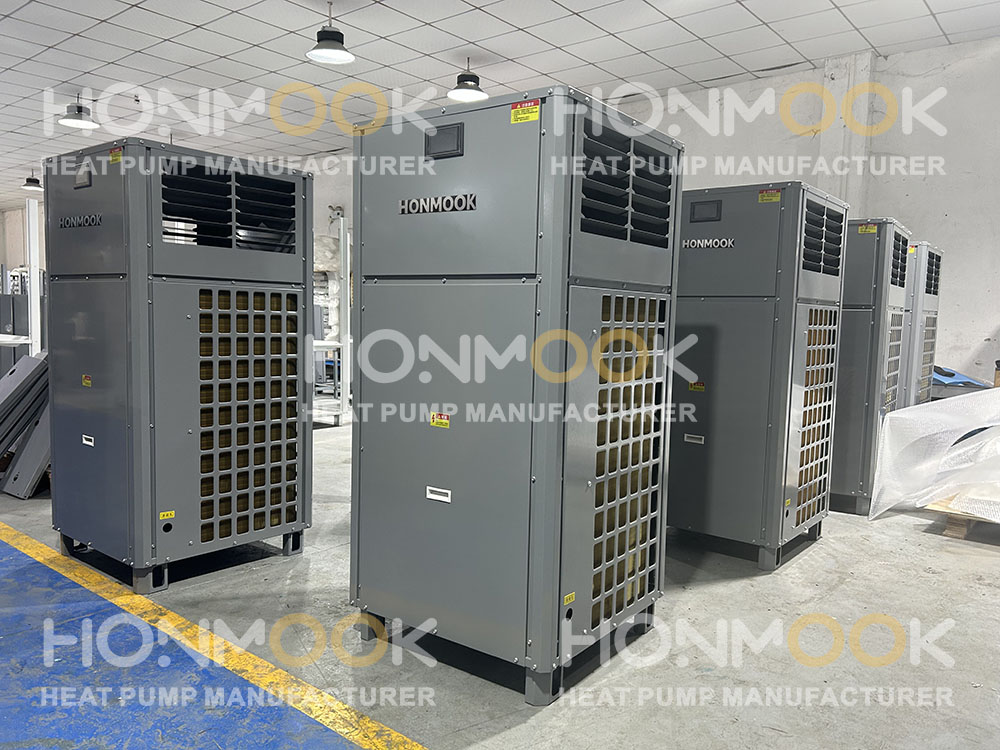
We do not stock generic units. We do not guess.
We ask for your pond dimensions, your location, your winter low, your insulation. We calculate heat loss. We select components. We configure the controller. You receive a customized heat pump for rice eel farming – built to match your pond, not the other way around.

